🐕 Bone Voyage Dog Rescue
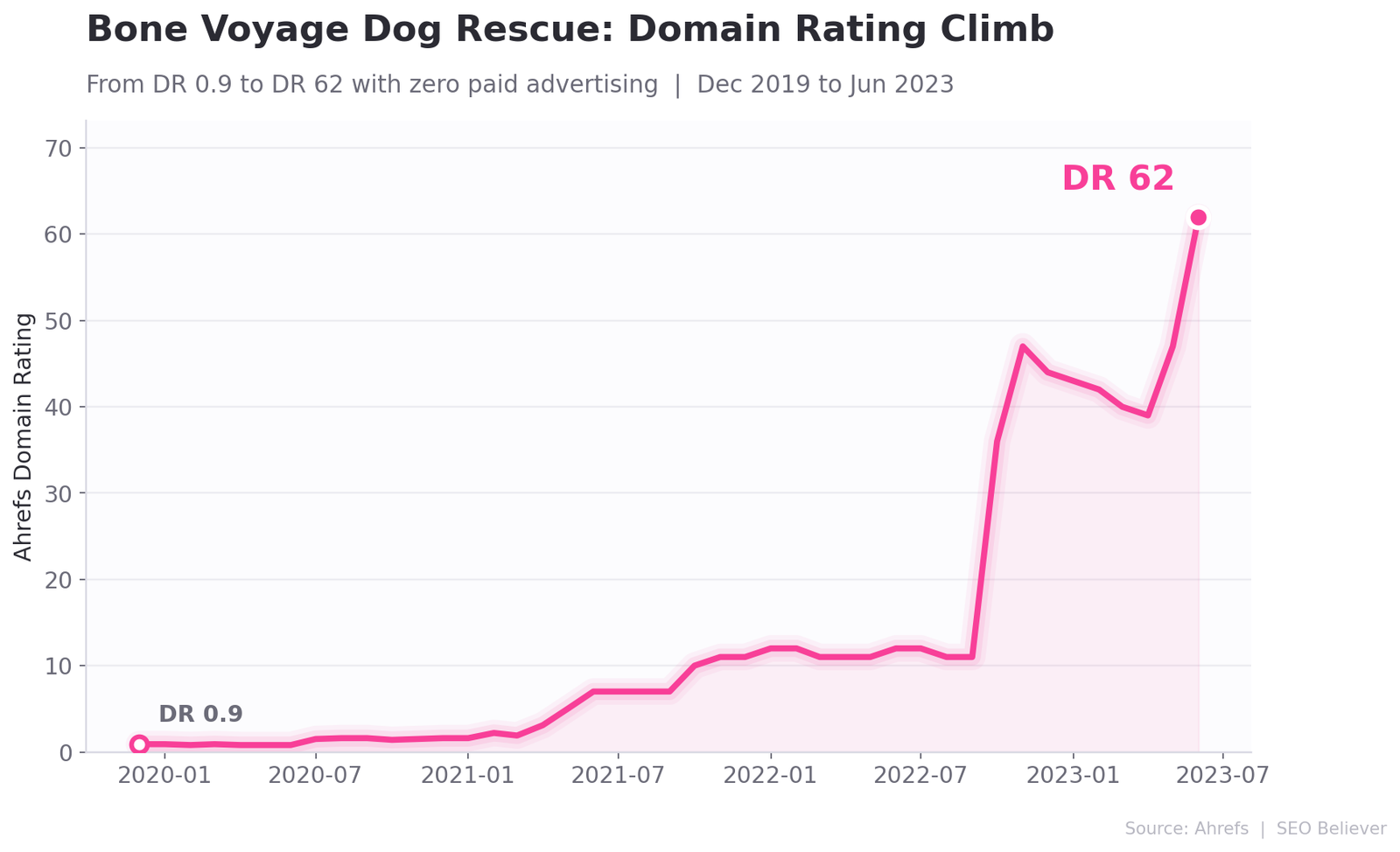
Years of low-authority drift, then about a year of focused SEO that drove the domain rating from 12 to a peak of 62. 4,000+ dogs placed into US homes. No paid ads.
The numbers
Every figure below comes from the actual program. No paid advertising was used at any point.
| Metric | Before | After | Timeframe |
|---|---|---|---|
| Domain rating (Ahrefs) | 0.9 | 62 | About a year of focused SEO |
| Organic keywords ranked | 0 | 31,310 | At peak |
| Content pieces published | Brochure site | 134 posts published | Across the program |
| Pages indexed (Google) | A handful of pages | 1,000+ | At peak |
| Dogs placed into homes | Word of mouth only | 4,000+ | Across the US and Canada |
| Paid advertising spend | $0 | $0 | Entire program |
The starting point
When I joined Bone Voyage as director, the rescue had a website that mostly served as a brochure. Domain rating: 0.8. Organic traffic: negligible. The rescue was placing dogs through word of mouth, foster networks, and in-person relationships.
The opportunity was significant. Tens of thousands of people search every month for terms like "rescue dogs for adoption," "small dogs for adoption near me," and breed-specific rescue queries. The competition, particularly from large platforms like Petfinder, was ranking on domain authority alone, not content quality. There was room for a well-built site to compete.
The approach
The SEO program had three phases, running sequentially and then in parallel as capacity grew.
Technical foundation (first)
The site needed a technical rebuild before any content work would compound. Crawlability issues, duplicate content from breed-page templates, no structured data, and slow page load times. Fixed the foundation first, then started building on top of it.
Content clusters around adopter intent
The key insight: adopters search differently than shelters think. They search by breed, temperament, size, age, and transport availability, not by rescue name. We built content clusters around each of those dimensions. Breed guides, transport FAQs, "what to expect" pieces for first-time adopters, and city-specific pages for the states and cities where we transported dogs.
Authority building: earned press, original research, and link-building
The single biggest lever was original research. We ran a nationwide 50-state survey, and the data earned coverage and links from newspapers and local outlets, the kind of links you cannot buy. On top of that came press coverage of rescue operations and relationships with veterinary and animal-welfare organizations. I also ran a deliberate link-building push in this period that included some purchased links. The low-quality ones I later identified and disavowed in 2024. The lesson I carry into SEO Believer: original research earns the links that actually hold.
What compounded
The domain authority sat near the floor for years. The site drifted from DR 0.9 in 2019 to about 12 by mid-2022 with little active SEO behind it. The real climb came when I engaged in earnest: in roughly a year, technical health, content depth, earned press, and an original 50-state survey combined to take it from about 12 to a peak of 62.
By year 4, Bone Voyage was ranking on the first page nationally for multiple breed-specific adoption queries that previously showed only Petfinder, Adopt-a-Pet, and major national shelters. The rescue was competing with sites that had been online for 20+ years and had enterprise-level budgets.
The lesson: SEO that's built properly compounds. Most businesses give up because they can't see the compounding that's already in motion.
What I'd do differently
- Start the technical audit in month 1, not month 4. I delayed because content felt more urgent. It wasn't.
- Set up structured data. We retrofitted schema mid-project and it was messier than building it in.
- Track keyword rankings weekly from the start, not monthly. Monthly tracking misses the early signals that tell you what's working.
Want results like this for your business?
The free AI visibility audit is where every engagement starts. No pitch, no obligation. Just a clear picture of where you stand.
Get my free AI visibility audit